Showing posts with label architecture. Show all posts
Little Tokyo Design Week: Future City (LTDW)
http://www.ltdesignweek.com/
"Little Tokyo Design Week: Future City (LTDW) celebrates the power and energy of cutting edge design and technology now emerging from Japan and its intersection with current trends materializing in Los Angeles. Design’s ability to move us towards a more sustainable and creative urban lifestyle is at the heart of this five-day festival, which will be open to the public from July 13 – July 17, 2011. Little Tokyo Design Week will engage local and international designers, artists, architects, filmmakers, and students from the Southern California region to explore possible scenarios for a “New Urban Lifestyle.” Southern California has long been a leader in innovation, high tech industry, and experimental
thinking and Little Tokyo, one of downtown LA’s most sought-after districts, is ripe to serve as a testing ground to re-evaluate our existing lifestyles and re-think the future of urbanism in Los Angeles and beyond.
Spanning the geographic breadth of Little Tokyo, LTDW will present a series of programs that integrate Little Tokyo’s Big Three cultural institutions (the Japanese American National Museum, the Japanese American Cultural & Community Center, and the MOCA Geffen), community partners, retailers, and restaurants. Throughout the festival, symposia featuring progressive talent in the fields of design, technology, and the environment will be sited throughout the plethora of interesting meeting and plaza spaces Little Tokyo offers. A Pecha Kucha night (a series of presentations of 20 slides, each shown in 20 seconds), an outdoor film screening, fashion-inspired outdoor party, product demonstrations, design and student exhibitions, music, and an awards ceremony will round out LTDW’s exciting schedule.
An anticipated audience of 75,000 visitors will attend Little Tokyo Design Week, with marketing and public relations efforts targeting design professionals from the Los Angeles business, nonprofit, film and television communities; entrepreneurs; students; the design savvy public; tourists; and more.
Little Tokyo Design Week is a collaboration between Hitoshi Abe, Chair, UCLA Department of
Architecture and Urban Design & Principal, Atelier Hitoshi Abe; Jon Kaji, President, Kaji & Associates / Nikkei Center; Community Arts Resources; and the LTDW Steering Committee.
Little Tokyo Design Week is currently seeking sponsorship for the July 2011 festival. This five-day event offers sponsors and individuals a unique opportunity for brand exposure and positioning, including, but not limited to, PR, logo placement in online and print materials, and live event integration. For in-kind, media, and general sponsorship inquiries, please contact info@ltdesignweek.com." - press release quote
Dwell on Design 2011
Here are some of my favorite exhibitors from Dwell on Design 2011. http://dod.dwell.com/
Clean air is a concern in Los Angeles and here's a great product to get the job done.
Simple, steel outdoor fireplaces for your back yard.
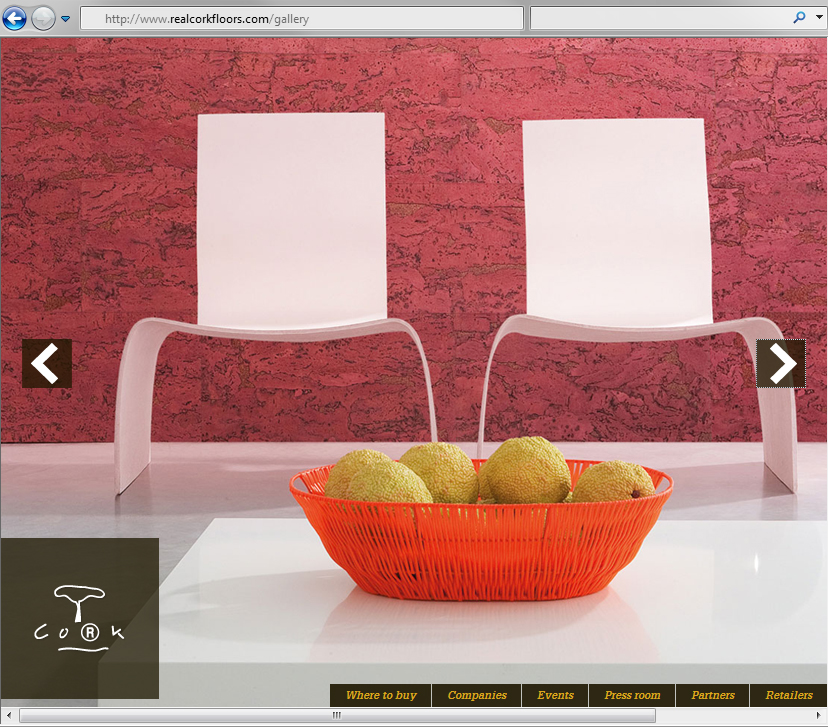
Cork is a wonderful product and in this installation they used it on the wall.
Molo had a very well designed display at Dwell. Impressive products.
Los Angeles River Revitalization Plan
"The City has created a "one-stop shop" web portal that encourages users of all ages to learn about the latest events related to its landmark resource: The Los Angeles River."
http://www.lariver.org/
The Piggy Back Yard - a FoLAR central city initiative
I attended a forum on infrastructure and this project caught my eye.
Visit the website for full details:
http://piggybackyard.org/
"Our vision for the Piggyback Yards is founded on four major principles; restore the Los Angeles River at the heart of the city while providing access to people and promoting sound water management; create significant public open space with a wealth of activities; connect to adjacent neighborhoods and bridge between east and west while maintaining all major existing railroads; build a diverse, vibrant community where people live, work, learn and play."
4/20/2011
Los Angeles Business Council Architectural Awards
June 2010
Los Angeles Business Council Architectural Awards honors the project "Horizon at Playa Vista" for an Award of Excellence in the category of New Buildings - Commercial.
Jim Jarmouch
The beauty of life is in small details, not in big events.
Nothing is original. Steal from anywhere that resonates with inspiration or fuels your imagination. Devour old films, new films, music, books, paintings, photographs, poems, dreams, random conversations, architecture, bridges, street signs, trees, clouds, bodies of water, light and shadows. Select only things to steal from that speak directly to your soul. If you do this, your work (and theft) will be authentic. Authenticity is invaluable; originality is nonexistent. And don't bother concealing your thievery - celebrate it if you feel like it. In any case, always remember what Jean-Luc Godard said: "It's not where you take things from - it's where you take them to."
Drawing: Site Section
This drawing combines a watercolor rendering of a site plan with a computer generated site section. I enjoy the combined techniques and think of it as a successful example of an informative as well as a provocative drawing.
Maharam Digitial Projects
Competition
I am entering an architectural competition.
http://www.risingtidescompetition.com/risingtides/Home.html
Sketchbook Quote....
Architecture may reside within the lines on the paper. I am realizing the fact that the verbiage and built constructs are too open for criticism/ comment/ observation to be considered pure architecture. Architecture should be in the act of the Architect. It should be owned and understood by the Architect first. The built entities and phenomenons that are inspired by the drawings may be something else. The actions on the paper are the evidence of Architectural thought.
Sketchbook Quote....
The studio is a time for critical discourse. The time and space between daily studio class is for production and refinement. Balancing between these two is the key for time management. Once you may manage time you can also manage your mind and imagination. For me the enjoyment is capturing what is in your head and putting that on paper and in models.
Sketchbook Quote...
Hand Craft vs. Hand Made
You can observe the quality of an object and judge like and dislike. Independent of this would be your knowledge of its tectonics. Is something put together with thought and care or is it just put together out of necessity. One is a craft that should be taught through the generations and the other s just desperation.
An Incomplete Manifesto for Growth
Written in 1998, the Incomplete Manifesto is an articulation of statements exemplifying Bruce Mau’s beliefs, strategies and motivations. Collectively, they are how we approach every project.
1.Allow events to change you.You have to be willing to grow. Growth is different from something that happens to you. You produce it. You live it. The prerequisites for growth: the openness to experience events and the willingness to be changed by them.
2.Forget about good.Good is a known quantity. Good is what we all agree on. Growth is not necessarily good. Growth is an exploration of unlit recesses that may or may not yield to our research. As long as you stick to good you'll never have real growth.
3.Process is more important than outcome.When the outcome drives the process we will only ever go to where we've already been. If process drives outcome we may not know where we’re going, but we will know we want to be there.
4.Love your experiments (as you would an ugly child).Joy is the engine of growth. Exploit the liberty in casting your work as beautiful experiments, iterations, attempts, trials, and errors. Take the long view and allow yourself the fun of failure every day.
5.Go deep.The deeper you go the more likely you will discover something of value.
6.Capture accidents.The wrong answer is the right answer in search of a different question. Collect wrong answers as part of the process. Ask different questions.
7.Study.A studio is a place of study. Use the necessity of production as an excuse to study. Everyone will benefit.
8.Drift.Allow yourself to wander aimlessly. Explore adjacencies. Lack judgment. Postpone criticism.
9.Begin anywhere.John Cage tells us that not knowing where to begin is a common form of paralysis. His advice: begin anywhere.
10.Everyone is a leader.Growth happens. Whenever it does, allow it to emerge. Learn to follow when it makes sense. Let anyone lead.
11.Harvest ideas.Edit applications. Ideas need a dynamic, fluid, generous environment to sustain life. Applications, on the other hand, benefit from critical rigor. Produce a high ratio of ideas to applications.
12.Keep moving.The market and its operations have a tendency to reinforce success. Resist it. Allow failure and migration to be part of your practice.
13.Slow down.Desynchronize from standard time frames and surprising opportunities may present themselves.
14.Don’t be cool.Cool is conservative fear dressed in black. Free yourself from limits of this sort.
15.Ask stupid questions.Growth is fueled by desire and innocence. Assess the answer, not the question. Imagine learning throughout your life at the rate of an infant.
16.Collaborate.The space between people working together is filled with conflict, friction, strife, exhilaration, delight, and vast creative potential.
17.____________________.Intentionally left blank. Allow space for the ideas you haven’t had yet, and for the ideas of others.
18.Stay up late.Strange things happen when you’ve gone too far, been up too long, worked too hard, and you're separated from the rest of the world.
19.Work the metaphor.Every object has the capacity to stand for something other than what is apparent. Work on what it stands for.
20.Be careful to take risks.Time is genetic. Today is the child of yesterday and the parent of tomorrow. The work you produce today will create your future.
21.Repeat yourself.If you like it, do it again. If you don’t like it, do it again.
22.Make your own tools.Hybridize your tools in order to build unique things. Even simple tools that are your own can yield entirely new avenues of exploration. Remember, tools amplify our capacities, so even a small tool can make a big difference.
23.Stand on someone’s shoulders.You can travel farther carried on the accomplishments of those who came before you. And the view is so much better.
24.Avoid software.The problem with software is that everyone has it.
25.Don’t clean your desk.You might find something in the morning that you can’t see tonight.
26.Don’t enter awards competitions.Just don’t. It’s not good for you.
27.Read only left-hand pages.Marshall McLuhan did this. By decreasing the amount of information, we leave room for what he called our "noodle."
28.Make new words.Expand the lexicon. The new conditions demand a new way of thinking. The thinking demands new forms of expression. The expression generates new conditions.
29.Think with your mind.Forget technology. Creativity is not device-dependent.
30.Organization = Liberty.Real innovation in design, or any other field, happens in context. That context is usually some form of cooperatively managed enterprise. Frank Gehry, for instance, is only able to realize Bilbao because his studio can deliver it on budget. The myth of a split between "creatives" and "suits" is what Leonard Cohen calls a 'charming artifact of the past.'
31.Don’t borrow money.Once again, Frank Gehry’s advice. By maintaining financial control, we maintain creative control. It’s not exactly rocket science, but it’s surprising how hard it is to maintain this discipline, and how many have failed.
32.Listen carefully.Every collaborator who enters our orbit brings with him or her a world more strange and complex than any we could ever hope to imagine. By listening to the details and the subtlety of their needs, desires, or ambitions, we fold their world onto our own. Neither party will ever be the same.
33.Take field trips.The bandwidth of the world is greater than that of your TV set, or the Internet, or even a totally immersive, interactive, dynamically rendered, object-oriented, real-time, computer graphic–simulated environment.
34.Make mistakes faster.This isn’t my idea -- I borrowed it. I think it belongs to Andy Grove.
35.Imitate.Don’t be shy about it. Try to get as close as you can. You'll never get all the way, and the separation might be truly remarkable. We have only to look to Richard Hamilton and his version of Marcel Duchamp’s large glass to see how rich, discredited, and underused imitation is as a technique.
36.Scat.When you forget the words, do what Ella did: make up something else ... but not words.
37.Break it, stretch it, bend it, crush it, crack it, fold it.
38.Explore the other edge.Great liberty exists when we avoid trying to run with the technological pack. We can’t find the leading edge because it’s trampled underfoot. Try using old-tech equipment made obsolete by an economic cycle but still rich with potential.
39.Coffee breaks, cab rides, green rooms.Real growth often happens outside of where we intend it to, in the interstitial spaces -- what Dr. Seuss calls "the waiting place." Hans Ulrich Obrist once organized a science and art conference with all of the infrastructure of a conference -- the parties, chats, lunches, airport arrivals — but with no actual conference. Apparently it was hugely successful and spawned many ongoing collaborations.
40.Avoid fields.Jump fences. Disciplinary boundaries and regulatory regimes are attempts to control the wilding of creative life. They are often understandable efforts to order what are manifold, complex, evolutionary processes. Our job is to jump the fences and cross the fields.
41.Laugh.People visiting the studio often comment on how much we laugh. Since I've become aware of this, I use it as a barometer of how comfortably we are expressing ourselves.
42.Remember.Growth is only possible as a product of history. Without memory, innovation is merely novelty. History gives growth a direction. But a memory is never perfect. Every memory is a degraded or composite image of a previous moment or event. That’s what makes us aware of its quality as a past and not a present. It means that every memory is new, a partial construct different from its source, and, as such, a potential for growth itself.
43.Power to the people.Play can only happen when people feel they have control over their lives. We can't be free agents if we’re not free.
http://www.brucemaudesign.com/manifesto.html
"I was once asked what I think are the ten most important principles that helped make me a successful architect, planner, and educator...
(1) Think positively, not negatively.
(2) Accept structure but know that it is to be questioned and broken when necessary.
(3) Always be willing to explore, experiment and invent. Do not accept the status quo.
(4) Know yourself and keep your work consistent with who you are and how you think.
(5) Maintain good moral and social values.
(6) Be humble, honest, compassionate, and egalitarian.
(7) Have conviction about your work.
(8) Be open and say yes to most ideas and requests. The good ones will be valuable, the bad ones will cease to exist.
(9) Allow employees and fellow workers freedom and the ability to work to their strengths. Avoid hierarchy.
(10) Money should be the residual of work, not the goal. But do not compromise your worth."
- Raymond Kappe

I have enjoyed making the drawings above for one of my projects at work. I always struggle with using the computer in a manner that looks like something created by my hand rather than by the software aesthetic. In this particular case I used a perspective technique and then overlay a sepia coloring to generate a soft, romantic perspective of the space we were designing. I think the drawings are successful at two levels. First, it conveys the technical information of the project. For example, the relationship to the earth as well as the systems used for construction. Second, it compels the viewer to look and study the design because of the grain of the render and delicateness of the perspective. I've enjoyed making these drawings and look forward to using this ideal way of drawing in future design presentations.

The image above is a screen capture of two 'start up' screens for the computer program Revit. I stacked the images on top of themselves for comparison purposes. Revit is the software I am currently using. What's interesting to me is the graphic. Notice the dates on the images that reflect the software versions. It amazes me that Revit 2009, the later of the two versions, has such a low quality graphic. This reversal of quality to sophistication may also be reflected in the actual software. At some times it can do amazing things. And at other times the most basic principles of architecture design cripple the software and render it useless.
Currently architecture is going through a transition. This is difficult because I'm in the middle of defining what Architecture means to me. However, I am excited to be practicing at this time. I'm caught between a self realization and a technological breakthrough. It will be interesting to see what comes out of these times.
Louis I. Kahn - "Conversations with Students" pg. 31-32
As a professional you have the obligation of learning your conduct in all relationships...in institutional relationships, and in your relationship with men who entrust you with work.
Another aspect is training a man to express himself. This is his own prerogative. He must be given the meaning of philosophy, the meaning of belief, the meaning of faith. He must know the other arts.
An architect must use round wheels, and he must make his doorways bigger than people. But architects must learn that they have other rights...their own rights. To learn this, to understand this, is giving the man the tools for making the incredible, that which nature cannot make. The tools make a psychological validity, not just a physical validity, because man, unlike nature, has choice.
The third aspect you must learn is that architecture really does not exist. Only a work of architecture exists. Architecture does exist in the mind. A man who does a work of architecture does it as an offering to the spirit of architecture.....
Subscribe to:
Posts (Atom)